Hey there, fellow engineers, data center ops folks, and anyone who’s ever wondered why their shiny new optical module starts acting wonky when the room heats up a little. Let’s cut through the jargon and talk about something we deal with every single day here—how temperature straight-up kills or makes an optical module work like a dream. I’m Alex, been in the optical module game for 7 years now, and I’ve seen it all: modules that died mid-peak traffic during a hot summer, ones that ran flawless through a warehouse heatwave, and every weird quirk in between. Let’s get real, no stuffy textbook vibes. Optical Module
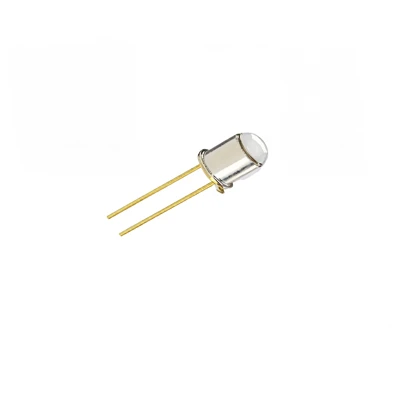
First off, let’s keep this basic: optical modules are the little workhorses that move data over fiber—you know, the things that make your Netflix stream, cloud storage, and company’s big data transfers not lag. They have tiny lasers (VCSELs, EMLs, all that jazz), photodiodes that catch the light, and a bunch of electronics crammed into a small space. Here’s the big secret most people don’t know: temperature is the silent boss of how all these parts work. It’s not just “too hot is bad”—it’s too hot, too cold, even the tiny swings between day and night that mess things up.
Let’s start with the stars of the show: the lasers. Lasers aren’t like lightbulbs—they need super specific conditions to spit out that steady, focused light we need for data. Take VCSELs first, those are the ones used in short-reach modules like SR4 or LR4 for data centers. I remember last year a client in Arizona hit us up panicking because their new SR4 modules kept dropping packets when the server room hit 104°F (that’s 40°C for my metric homies). Turns out, when temps climb, the VCSEL’s threshold current goes up. What’s threshold current? That’s the minimum juice the laser needs to actually turn from a dim glow into a working laser beam. When it’s hot, that number jumps—so if the module’s power supply was only calibrated for 77°F (25°C), suddenly the laser isn’t getting enough current, so it spits out weaker light. We fixed that for them by tweaking the module’s current limit to adjust for heat, no RMA needed.
And it’s not just strength—wavelength drifts are the next big headache. Every laser has a sweet spot wavelength, like 850nm for VCSELs, 1310nm for some long-reach stuff. When temp goes up, the material the laser is made of (like indium phosphide) expands a tiny bit, which changes the band gap—so the wavelength shifts. A 1nm shift might not sound like much, but if you’re using WDM modules (those that send multiple wavelengths over one fiber), those shifts can make two different wavelengths overlap. That causes crosstalk, where each signal bleeds into the other, and suddenly your data is unreadable. I’ve seen WDM modules go from 100m reach to 50m just because the server room AC died over a weekend. Crazy, right?
Now, what about when it’s too cold? I get that most people focus on heat, but cold is a whole other problem. Let’s say you have a module sitting in a warehouse in Minnesota in winter, with no extra heating. When temps drop way below the module’s rated low (say, -40°C for industrial modules, but some consumer ones only go to 0°C), the laser’s threshold current also jumps—just in a different way. The semiconductor material gets tighter, so electrons don’t move as easy, so you need more current to get that laser going. I had a client who installed some modules in a remote cell tower in Alaska last year that kept failing at -20°C; their modules were rated down to 0°C, so once it dipped below that, the laser couldn’t even turn on. We swapped them for our industrial-grade modules that handle -40 to 85°C, and they’ve been running smooth ever since.
Next up, the photodiodes—these are the things that catch the light at the other end of the fiber and turn it back into electrical signals. Their performance also tanks with temp changes. When it’s hot, photodiodes get more “dark current.” That’s tiny electric current that flows even when no light is hitting them—like static on a radio, but worse. Too much dark current, and the signal gets buried in noise, so the receiver can’t tell the difference between a 0 and a 1. I remember a test we did last summer in our lab when our AC was acting up; a module’s receiver dark current went up 3x at 45°C, and the bit error rate (BER) jumped from 1e-12 (super good) to 1e-3 (totally useless). That’s the difference between a working network and a total outage.
Then there’s the electronics part—all the tiny chips, drivers, transimpedance amplifiers (TIAs) crammed inside the module. These get wonky with temp too. Drivers that power the laser can start misfiring when it’s too hot, so they send inconsistent current to the laser, leading to wobbly light. TIAs, which amplify the tiny signal from the photodiode, add more noise as temp rises, like cranking up a speaker and getting static. And let’s not forget about thermal expansion of the module’s packaging. The tiny lens that focuses the light might shift just a fraction when it gets hot or cold, so less light hits the photodiode. That’s a subtle one—you might not see a full outage, just slower speeds or more errors, which is the worst because it’s hard to debug.
Wait, there’s also the temperature swing rate, not just the steady temp. I’ve seen modules pass all our static temp tests, but fail when we ramp temp up 10°C per hour, like if the server room AC cycles hard. The thermal mass of the module’s parts doesn’t all heat up at the same rate—so the laser shifts before the electronics can adjust, leading to temporary wavelength drift or current spikes. That’s a tricky one because it’s not a permanent failure, just intermittent issues that make clients think their network has gremlins, not a temperature problem.
Now, let’s talk about what this means in the real world, not just lab tests. For data centers, that’s a big deal. If your server room isn’t kept at a consistent 68-77°F (20-25°C), you’re risking outages. I once worked with a data center that tried to save money by turning down the AC at night, so temps would swing 15°F. Their modules started having random packet loss, and after a week of troubleshooting, we realized the temp swings were causing intermittent wavelength drift. They fixed the temp consistency, and the problem vanished. For industrial use cases—like cell towers, oil and gas pipelines, or railway sensors—temp can go from -40 to 85°C in a day, so you need modules rated for extreme temps, not just the standard ones.
Here’s the thing: not all modules handle temp the same. When we design our modules, we test them across the entire temp range, use temperature-compensating circuits (TCCs) that tweak the laser current when temp changes, and even use thermoelectric coolers (TECs) for long-reach EML modules that need super stable wavelengths. TECs are like tiny AC units for the laser—they keep it at a fixed temp no matter what’s going on around it. That’s why our LR4 modules work flawlessly in places where temps swing hard, because the TEC keeps the laser’s wavelength locked.
But here’s the mistake a lot of people make: buying the cheapest module without checking the temp rating. I’ve seen clients buy modules from no-name suppliers that only work between 0 and 70°C, then get mad when they fail in their server room that hits 80°C. Those cheap modules skip the TCCs and proper thermal design, so they can’t handle temp shifts. That’s why we always tell clients: tell us where your module will live, and we’ll pick the right one. If it’s a data center with consistent temps, standard modules work. If it’s a remote cell tower, you need industrial grade.
Let’s wrap this up with some quick takeaways I’ve learned over the years: 1) Temp affects every single part of an optical module, from lasers to photodiodes to lenses. 2) It’s not just heat—cold and rapid swings are just as bad. 3) Cheap modules cut corners on thermal design, so they’ll fail when temps go off. 4) Consistent temp is key, but if you can’t have that, get modules rated for your environment.
If you’re dealing with module performance issues—whether that’s random outages, packet loss, or weird errors that you can’t pin down—it’s worth checking the temp in your environment first. If you need help picking the right module for your temp conditions, or just want to chat about how to optimize your network for temperature, hit me up. We’ve tested all our modules across every temp scenario, and we can help you find the right fit without the guesswork.
Optoelectronic Devices References:
- Agrawal, G. P. (2010). Fiber-Optic Communication Systems (4th ed.). Wiley.
- Keiser, G. (2011). Optical Fiber Communications (4th ed.). McGraw-Hill.
- Optical Internetworking Forum. (2020). OIF-CEI-02.2: Common Electrical Interface (CEI) 2.0 Implementation Agreement.
- IEEE 802.3. (2022). IEEE Standard for Ethernet.
Zhejiang Chengmei Technology Co., Ltd.
As one of the most professional optical module manufacturers and suppliers in China, we’re featured by quality products and good price. Please rest assured to wholesale bulk premium optical module made in China here from our factory. Also, quotation is available.
Address: No. 383, Jinhe Road, Qinshan Street Industrial Park, Haiyan County, Jiaxing City, Zhejiang Province
E-mail: shiwei@cm-semi.com
WebSite: https://www.cmfiber.com/
