If you’ve ever ordered a product online, picked up a package from a retail store, or received a shipment at your warehouse, you’ve almost certainly encountered the work of a carton sealing machine. For many people, these machines are the unsung heroes of supply chain operations—hidden away in back rooms, humming along to keep packages moving from production floors to customer hands. As a supplier of these machines, I get asked constantly by new customers, small business owners who are scaling their operations, and even warehouse managers who’ve never used one before: “How does a carton sealing machine actually work?” It’s a fair question, especially when you’re investing in equipment that can cut down on labor time, reduce material waste, and speed up your entire packaging process. Let me break this down in plain, practical terms—no overly technical jargon, just the real-world mechanics that power these workhorses. Carton Sealing Machine
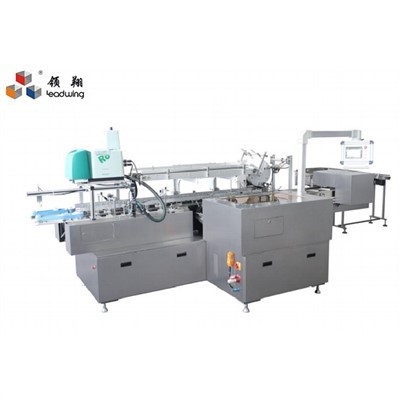
First, let’s start with the basics: what a carton sealing machine does, and what it doesn’t. Unlike a more complex packaging machine that fills boxes, wraps products inside, or applies custom labels, a carton sealer’s sole job is to close corrugated cardboard boxes consistently and securely with adhesive tape. Every standard corrugated box, whether it’s a small mailer for e-commerce or a large shipping crate for industrial goods, has four folded flaps at the top (and sometimes the bottom) when it comes off the production line or is assembled by hand. The sealer’s job is to fold those top flaps down flat, apply a strip of pressure-sensitive tape over the center seam where the flaps meet, cut the tape to the right length, and repeat the same process—usually on both the top and bottom of the box, depending on your needs. The consistency here is key: if you’re sealing 100 boxes an hour, a manual process might lead to crooked tape, overlapping tape, or gaps that cause a box to burst open during shipping. A carton sealer eliminates that inconsistency.
Now, let’s get into the core components that make this happen. Every carton sealing machine—no matter if it’s a small tabletop model for a home-based business or a heavy-duty industrial unit for a fulfillment center—shares the same foundational parts. Let’s walk through each one step by step, as a box moves through the machine. The first part you’ll notice is the infeed conveyor. This is where boxes enter the machine, usually placed by a worker or connected to a production line that spits out assembled boxes. The conveyor’s job is to move the box at a steady, precise speed—usually around 30 to 50 feet per minute, depending on the model—so every component of the sealer can keep up. If the conveyor speeds up too much, the machine can’t apply the tape correctly; if it slows down, you’re wasting time. That’s why most modern sealers have adjustable conveyor speeds, so you can match them to your existing workflow.
Next, as the box moves into the machine, it hits a set of flap folders. This is one of the most critical parts of the process, and it’s where most people run into issues if their sealer is misadjusted. Flap folders are usually angled plastic bars or metal arms positioned on either side of the conveyor. When a box passes through, these bars press against the two side top flaps, folding them inward. Then, a second set of folders presses down on the front and back flaps, locking them flat against the box. The goal here is to make sure all four top flaps are aligned perfectly, so the tape can lie smoothly over the seam. If the flap folders are too loose, the flaps will fold unevenly, leading to gaps in the taped seam; if they’re too tight, they’ll crush the box or bend the flaps so much that the tape doesn’t stick properly. A good supplier like me will always spend time adjusting these folders with customers during setup, not just turning a dial and walking away.
Once the flaps are folded flat, the box moves to the tape applicator assembly. This is the part most people picture when they think of a carton sealer, and it’s deceptively simple. The tape roll—usually a 2-inch or 3-inch wide roll of hot-melt acrylic or polypropylene packaging tape, designed to stick to cardboard without leaving residue—mounts on a spindle at the top of the machine. From there, the tape is pulled down through a series of rollers, which keep it straight and free of wrinkles, before it meets the box’s top seam. The applicator head presses the tape firmly against the box as the box moves forward, using a small, spring-loaded roller to create even pressure. This is where the “pressure” in pressure-sensitive tape comes in: the roller ensures the tape adheres fully to both the box’s top flaps, so there’s no chance it will peel away during transit.
After the tape is applied, the machine needs to cut it cleanly to the right length. That’s where the tape cutter comes in—often a sharp serrated blade mounted on a spring, or in newer models, a hot blade that melts the tape slightly for a cleaner cut. The length is usually pre-programmed, so you don’t have to adjust it every time you use a different box size. For example, a small 6x6x6 inch mailer will need a shorter tape strip than a 18x12x12 inch shipping box. Most modern sealers have a sensor that detects the length of the box as it moves through, so it automatically cuts the tape to the correct size, eliminating wasted tape. That’s a big benefit over manual sealing, where you might overcut and waste 10 to 15 feet of tape a day, or undercut and have to add an extra strip, doubling your tape usage.
Many people don’t realize that most carton sealers also seal the bottom of the box, not just the top. That’s especially important for heavy boxes, like those holding electronics or industrial parts, where the bottom seam is under pressure when the box is stacked. The bottom sealer works almost exactly like the top, but it’s mounted below the conveyor. As the box moves through the machine, a set of bottom rollers pulls tape from a lower roll, applies it to the bottom seam, and cuts it just like the top. That means a worker can load an empty box onto the infeed, and the machine will automatically seal both the top and bottom in one pass—no need to flip the box over manually, saving a ton of labor time.
Now, let’s talk about the different types of carton sealers, because the mechanism can vary a bit depending on what you need for your operation. For small businesses or warehouses with limited space, tabletop sealers are compact, designed to sit on a workbench, and can handle box sizes up to around 18 inches wide. Their mechanism is simplified compared to industrial models: they have a smaller conveyor, a single tape head, and manual adjustment for flap folders. They’re perfect for e-commerce sellers who ship 50 to 100 boxes a day, but they won’t handle large boxes or high volumes.
For mid-sized warehouses that ship 100 to 500 boxes a day, semi-automatic sealers are the sweet spot. These models have adjustable width and height settings, so you can switch between box sizes quickly—no need to manually adjust flaps or tape heads every time you change a box. They also have a motorized conveyor, so you don’t have to push the boxes through by hand, and they can handle heavier boxes up to 50 pounds.
For large fulfillment centers or manufacturing plants that ship thousands of boxes a day, fully automatic sealers are the way to go. These machines connect to an automated production line, so boxes come in, are sealed, and move directly to a shipping area without any human intervention. Their mechanism is more complex: they have multiple tape heads (some even apply two layers of tape for extra security), sensors that detect box dimensions in real time, and can handle boxes up to 48 inches wide. They’re built for 24/7 use, with durable steel frames and industrial-grade motors that don’t break down easily.
I’ve seen a lot of customers make the mistake of buying a cheap, off-brand carton sealer that doesn’t work as advertised. Usually, the issue is not that the machine is a bad design—it’s that the key components are low quality. For example, a plastic flap folder will wear out after a few months, leading to uneven flaps, while a metal folder will last for years. A flimsy tape roller won’t apply enough pressure, leading to tape peeling during shipping, while a spring-loaded roller will adjust automatically to keep consistent pressure, even if the box is slightly warped. That’s why it’s worth investing in a reputable supplier, instead of going for the cheapest option.
Let’s also address some common misconceptions about how these machines work. Some people think carton sealers only work with standard, straight boxes, but modern models can handle irregular boxes, like those with slanted flaps or custom sizes. You just adjust the flap folders to match the box’s flap shape, and the machine will still apply the tape evenly. Another myth is that they only work with one type of tape—actually, most sealers can handle different widths of tape, from 1 inch for small mailers to 4 inches for heavy shipping boxes, and even specialty tapes like reinforced tape for extra-sturdy sealing.
The real value of a carton sealer isn’t just the mechanics—it’s the impact on your business. Let’s do a quick math example: if you seal 100 boxes a day, manually, that takes two workers, each spending 20 minutes a day sealing, costing you around $15 an hour per worker, so $10 a day in labor. A carton sealer will do that in 5 minutes, with one worker just placing the boxes on the infeed, cutting your labor time by 75%. You’ll also use 30% less tape, because the machine cuts exactly the length you need, instead of the extra length people use manually. For a business shipping 50,000 boxes a year, that’s thousands of dollars in savings on labor and materials.
If you’re thinking about adding a carton sealing machine to your operation, the first step is to figure out your needs: how many boxes do you ship a day, what sizes and weights are your boxes, and how much space do you have? As a supplier, I always recommend testing a machine before you buy—most reputable suppliers will let you bring in a sample box and run it through the machine to see how it works. You’ll want to check that the flaps fold evenly, the tape is applied straight with no gaps or wrinkles, and the machine is easy to adjust when you switch box sizes.

If you’re ready to upgrade your packaging process and see how a carton sealing machine can save you time, money, and headaches, reach out to me. We’ll walk through your specific needs, show you our range of machines, and help you find the right fit for your operation. Don’t settle for manual sealing that slows you down and risks damaged shipments—invest in a machine that works as hard as your business does.
Packing Machine References:
- Corrugated Packaging Machinery Association. (2022). Operational Guidelines for Semi-Automatic Carton Sealing Equipment.
- Industrial Packaging Association. (2021). Best Practices for Carton Flap Folding and Tape Application in Shipping Operations.
- U.S. Small Business Administration. (2020). Cost-Benefit Analysis of Packaging Equipment for E-Commerce and Small Manufacturing Operations.
- Packaging Machinery Manufacturers Institute. (2023). Standard Components and Safety Features of Automated Carton Sealing Systems.
Wenzhou Leadwing Machingry Co., Ltd.
With abundant experience, we are one of the most reliable carton sealing machine manufacturers and suppliers in China. We warmly welcome you to buy advanced carton sealing machine made in China here from our factory. All customized machines are with high quality and low price.
Address: Room 101, Unit 2, Building 10B, Zilai Entrepreneurial Park, Wanquan Town, Pingyang County, Wenzhou City, Zhejiang Province
E-mail: wzleadwing@163.com
WebSite: https://www.leadwingmach.com/
