Hey there, quick question – if you’ve ever walked past a construction site, you’ve probably seen those shiny, six-sided heads peeking out of beams, walls, or even highway guardrails. I’m not talking about the weird one-off bolt someone dropped last week – I’m talking about hex bolts, the most common fastener you’ll spot on any build. As a hex bolt supplier, I get asked all the time: “Can you actually use hex bolts in construction, or are they just for random shelf projects?” Spoiler alert – yes, they absolutely are, and if you’re a builder, contractor, or even a DIYer working on a residential add-on, they’re probably the first bolt you should reach for. Let me break this down like we’re chatting over a coffee after a long day on-site, no boring jargon, just real talk about why hex bolts rule the job. Hex Bolt

First, let’s cut to the chase: construction needs fasteners that don’t quit. Whether it’s a skyscraper in downtown Chicago, a new school gym in Texas, or a simple deck for a backyard in Florida, that stuff has to hold up to everything – wind, rain, temperature swings, even the occasional squirrel trying to chew through wiring (don’t ask). Hex bolts are made for that. Unlike, say, a random bolt from the hardware store with a round head that strips easy, hex bolts have that six-sided head design for a reason – it grips way better with a wrench or socket, no slipping half the time when your hands are sweaty, or you’re working in the dark under a deck. I’ve seen new guys on-site using regular bolts and stripping three before lunch, but a good hex bolt? You can torque it down hard enough that it won’t budge for decades. That’s a huge win for construction, where loose fasteners lead to way more headaches later – no one wants to fix a deck railing that’s wobbly six months after it’s built, right?
Wait, but let’s get specific about where hex bolts actually shine in construction, not just “everywhere.” Let’s start with structural steel. If you’ve ever driven by a big building being put up, those big steel beams you see stacked? They’re connected with heavy-duty hex bolts – like ¾-inch or 1-inch ones, sometimes even bigger. The reason? Structural steel needs connectors that can handle massive loads. A hex bolt’s shank is way thicker and stronger than, say, a carriage bolt, so it doesn’t bend or snap when two steel beams are holding up 10+ floors of building above them. I supply a lot of these for mid-rise apartments and warehouse builds, and the structural engineers always spec hex bolts for that exact job. They test these things to hell – pull them, twist them, leave them out in salt air for months – and hex bolts pass every time. No other fastener is as reliable for that kind of heavy lift.
Then there’s concrete and masonry work, which is another huge part of construction. If you’re anchoring a wooden post to a concrete foundation, or bolting a metal sign frame to a brick wall, hex bolts work here too – you just need the right type. Wait, a lot of people don’t know hex bolts come in different grades, right? For concrete, you want a wedge anchor hex bolt or a concrete screw hex bolt, something that bites into the concrete instead of just sitting there. I’ve had a local contractor tell me he once used a regular bolt to anchor a deck post and it pulled out after a heavy rainstorm – bad call. But a grade 5 hex bolt with a concrete anchor? That post won’t move even if your kid’s entire soccer team is leaning on it. And masonry – brick or block walls? Hex bolts with masonry inserts are the go-to, way stronger than those tiny lag bolts you’d use for a bookshelf at home.
Don’t sleep on exterior construction either, especially in harsh climates. If you’re building a bridge, a playground, or a fence along the coast where salt air is a problem, you need hex bolts made from corrosion-resistant materials. Stainless steel hex bolts, hot-dip galvanized ones – these are made to not rust through, even after years of being in rain, snow, or salt spray. I live in Florida, and I supply a lot of hex bolts for coastal construction projects, and guys here swear by galvanized hex bolts for pier supports. Rust is the #1 enemy of outdoor construction fasteners – once a bolt rusts, it expands, cracks concrete, or snaps, and that’s a safety issue. Hex bolts in the right material prevent that, which is why they’re the standard for anything outside that’s built to last.
But wait, is there a time you shouldn’t use hex bolts in construction? No fastener is perfect, and I’ll be real with you. If you’re working on something where aesthetics matter more than extreme load, maybe a finish project where you don’t want a six-sided head sticking out? Like a custom bookshelf for a client’s living room, that’s not a structural build – go for a Phillips head or a flat head. But for 99% of actual construction, not DIY shelf projects, hex bolts are the better pick. Another case? If you need to take the bolt apart regularly – like for a temporary structure, or a machine that gets moved around. Hex bolts are easy to loosen with a wrench, which is fine, but if you’re going to take it apart a lot, maybe a wing bolt or something else? But for permanent construction, that’s not a problem – you just tighten it once, and it’s good for decades.
Also, let’s talk cost and availability, two big factors for construction crews that work on tight budgets and tight timelines. Hex bolts are mass-produced, which means they’re cheaper than a lot of specialty fasteners, and every hardware store, supply yard, and online place has them in stock. I’ve had a crew come to me at 7 a.m. on a Monday panicking because they ran out of bolts for a beam connection – and we had them there by 8, same day, no delay. You can’t do that with some rare specialty bolt that takes three days to ship. Construction moves fast, and hex bolts move with it. That accessibility is a huge reason they’re the most used fastener in the industry, no contest.
Wait, a lot of new builders ask me about grade numbers too, right? Hex bolts have grades like 2, 5, 8 – that’s how strong they are. Grade 2 is for light duty, like small brackets, grade 5 is for medium structural stuff, grade 8 is for heavy loads. As a supplier, I help guys pick the right grade for their project – if you’re building a residential deck, grade 5 hex bolts are more than enough, but if you’re connecting steel beams for a commercial building, you need grade 8. That customization is another win – hex bolts come in every size and strength you could possibly need for construction, from tiny ¼-inch ones for light fixtures to 2-inch or bigger ones for heavy structural work. No other fastener has that range, honestly.
Let me also address the elephant in the room – safety. Construction is all about not cutting corners on safety, and hex bolts are a big part of that. Loose or weak fasteners cause accidents – beams shifting, walls collapsing, decks falling. I’ve been in the industry for 12 years, and I’ve never heard of a structural failure caused by a properly installed hex bolt. But I have heard of failures from using the wrong bolt – like a guy using a grade 2 bolt instead of grade 8 for a steel beam connection, and it bent during a windstorm. Hex bolts eliminate that risk because their strength is standardized, so you know exactly what you’re getting. No guessing if a bolt is strong enough – the grade is stamped right on the head, so engineers and contractors can verify it. That’s non-negotiable for construction.
Now, if you’re a builder, contractor, or project manager, and you’re still on the fence about using hex bolts, let’s wrap this up. They’re strong, reliable, corrosion-resistant, affordable, easy to get, and made for the exact demands of construction. I’ve supplied hex bolts to thousands of projects over the years, from small residential remodels to big commercial builds, and not once has a project had an issue with hex bolts. The only time someone has a problem is when they use the wrong grade, or the wrong material for the environment.
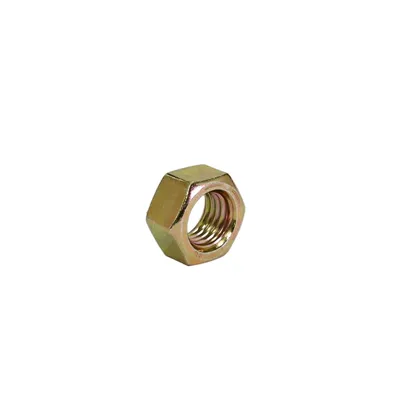
If you’re working on a construction project and need hex bolts, or have questions about what type is right for your job – whether it’s structural steel, concrete anchors, exterior coastal builds, whatever – hit me up. I can hook you up with the right grade, size, and material, no runaround, just fast, reliable service that keeps your project on schedule and safe. We’ve got bulk pricing for big projects, and we can ship same day if you’re in a pinch. Don’t waste time with generic fasteners when hex bolts are the proven standard for construction. Reach out, let’s chat about your needs.
Hex Nut References
- Steel Construction Manual, American Institute of Steel Construction, 15th Edition
- Masonry Fastening Handbook, International Code Council, 2021
- Corrosion Resistance of Fasteners for Coastal Construction, National Association of Home Builders, 2019
- Fastener Grade Identification and Application, Construction Fasteners and Tools Association, 2022
Jiaxing Jinling Hardware Technolgy Joint Stock Co., Ltd.
As one of the most experienced hex bolt manufacturers and suppliers in China, we also support customized service. Please feel free to buy bulk high-grade hex bolt made in China here from our factory. For quotation and price list, contact us now.
Address: No.32, Shenjiadai, Xuyouche Village, Qinshan Subdistrict, Haiyan County, Zhejiang Province, China
E-mail: jlzxl@jinlingfstn.com
WebSite: https://www.china-nut-factory.com/
