If you’re in the market for a nail gun robot, chances are you’re weighing how this automated tool will fit into your production line, your budget, and most importantly, your long-term peace of mind. As a supplier who’s worked with manufacturing teams from small woodworking shops to large modular construction facilities over the past decade, I’ve heard the same question a hundred times: “What exactly is the warranty for a nail gun robot?” It’s a fair question—this isn’t a disposable hand tool; a nail gun robot is a $10k to $50k investment, and a broken unit can halt entire shifts, delay projects, and cut into profits. Over the years, I’ve refined our warranty policy to balance practicality, transparency, and the real needs of our customers, so let’s break down exactly what our warranty covers, what it doesn’t, and how to make sure you get the most out of it. Nail Gun Robot
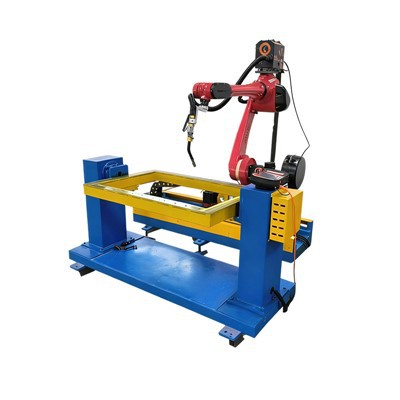
First, let’s start with the basics: our nail gun robot line is built for repetitive, heavy-duty work—think framing, sheathing, and subfloor installation—so we designed the warranty to protect you when that work goes wrong, not when a piece of normal wear and tear needs replacing. The core warranty period is 12 months from the date your robot ships to your facility, but we also offer an optional extended warranty for up to 36 months for customers who want extra coverage as their production volume scales. What’s most important here is that this isn’t a “limited warranty” that only covers half parts; our standard warranty includes both parts and labor for defects in materials or workmanship, which is a big differentiator from many of the cheaper, overseas-manufactured robots on the market that only cover parts and make you pay for a technician to travel for repairs.
Now, let’s get specific about what the standard warranty does cover, because this is where a lot of customers get confused when they compare policies. First, defects in core components that make the robot work: this includes the linear actuators that move the nail gun head, the precision positioning sensors that ensure nails go in straight and in the right place, the integrated control software, and the high-pressure air or hydraulic system (depending on your robot’s configuration) that drives the nails. If one of these parts fails because of a manufacturing error—say, a sensor calibration that was off at the factory, or a linear actuator that didn’t meet our quality tolerance for heavy use—we cover all replacement parts and a certified technician’s labor to swap it out, no cost to you. We also cover damage caused by a software glitch, not by operator error, so if a software update we push out has a bug that causes the robot to misfire or jam, we’ll send a technician to fix it and adjust the code, no extra charge.
We also cover pre-delivery inspection issues, which is a small but often overlooked part of the process. Every robot leaves our facility with a full 48-hour test run on a mock production panel to confirm it works as advertised. If for some reason your unit arrives with loose wiring, a misaligned nail gun, or any issue that shows up when you uncrated it and run your own initial tests, we’ll handle that at no cost—including covering any material you waste in those first test runs, which is a nice perk for teams that don’t want to lose hours of setup time.
But here’s the part that’s just as important: what the warranty does not cover. This is where honesty matters, because if we tried to hide exclusions, we’d end up with frustrated customers. First, normal wear and tear. A nail gun robot is designed to drive 100,000+ nails a month, and over time, parts like the nail feed track, the rubber seals on the air system, and even the nail gun itself will wear out. Those are consumable parts, like the belt on a conveyor or the blades on a saw, and we don’t cover them under the standard warranty—instead, we offer a discounted consumable parts kit for our customers, with parts engineered to fit our robots and tested to last as long as or longer than generic replacements. That’s not a loophole; it’s practical, because a robot that’s driven 100,000 nails will have different wear than one that’s only driven 10,000, and we want you to have parts that work reliably without cutting corners.
Next, operator error or improper maintenance. If you skip our required monthly maintenance checklist—like not lubricating the air system, or running nails that are too long or too short for the robot’s specifications—and that causes a jam that damages the nail gun head, that’s not our fault. We provide every customer with a free 2-hour training session when their robot is delivered, including a maintenance manual with clear, step-by-step instructions, and we post free video tutorials on our customer portal, so you have all the tools you need to keep your robot running. We also don’t cover damage from accidents, like dropping a tool on the robot, or power surges if you don’t have a surge protector installed (we do recommend one, and even sell them at a discount for customers who want to pair them with their robot).
Another big exclusion: modifications done by anyone not on our certified technician list. It might be tempting to have your in-house machinist tweak the robot to nail at a different angle or handle a different material, but if that modification causes a part to fail, we won’t cover it. We offer custom calibration for specific materials or project types as a paid service, and all modifications we do are tested to meet our warranty standards, so you’re covered if something goes wrong after that.
Now, let’s talk about how to file a warranty claim, because what good is a great warranty if you have to jump through hoops to get it honored. We made our claim process as simple as possible for our customers. If you have an issue, first reach out to our 24/7 customer support team—we have people on call around the clock to handle urgent problems, because we know a broken robot at 2 a.m. on a production deadline is a nightmare. The support team will ask you a few quick questions: what’s the serial number of your robot, what’s the error code if the control panel shows one, and what steps you’ve already taken to diagnose the issue. For most common problems—like a jammed nail feed or a sensor that’s out of alignment—our support team can walk you through a fix over the phone or via video call, so you don’t have to wait for a technician to show up and take half the shift. If the problem is more complex, we’ll send a certified technician to your facility within 48 hours of your claim (or 24 hours for emergency claims, like a robot that’s down during a critical project), and we cover all travel and labor costs for that visit. We also keep a spare parts inventory at our local hubs across North America, so common replacement parts are on hand and don’t have to ship from our main warehouse, which cuts down on downtime.
Over the years, we’ve adjusted our warranty based on feedback from customers, because no one knows how to use our robots better than the people who actually use them. For example, a few years back, a customer told us that their night shift operators didn’t check for software updates regularly, so when a small bug popped up, they had to wait for a technician to come in during the day. We responded by building an automatic update feature that runs during off-shift hours, so updates are installed without disrupting production, and that’s now included on all our newer robots as part of the standard warranty. Another customer, a modular home builder that runs their robot 18 hours a day, 6 days a week, asked for a way to extend coverage without paying for a full replacement, so we created our extended coverage plan: for an extra 15% of the initial robot cost, you can extend the warranty to 36 months, covering not just parts and labor, but even consumable parts for the last 12 months of the extended period. That’s a big win for high-volume customers who rely on their robot to keep up with demand.
I also want to address a common misconception that comes up when talking about warranty: that a longer warranty means a better product. I’ve seen robots from other companies that offer a 5-year warranty, only to find that most of that warranty covers parts that wear out within a year, or they hide so many exclusions that you’ll never actually file a claim. Our 12-month standard warranty is focused on the parts that are most likely to fail due to manufacturing defects, and the optional extended warranty is built for customers who want extra peace of mind as their robot ages, not for a sales gimmick. We stand behind our robots because we build them to last—our average robot has been in service for 7 years with minimal major repairs, and that’s the real proof that our quality holds up, not just the warranty terms on paper.
Another thing that sets our warranty apart is our coverage for material waste. When a robot is down, teams often have to pull workers off other projects to fix it, or they waste raw materials like lumber or sheathing because they can’t keep up with deadlines. Our standard warranty doesn’t cover that lost material, but our extended warranty does, and for our large-volume customers (those who buy 5 or more robots at a time), we offer a “downtime protection” add-on that compensates for lost productivity due to robot failures covered under the warranty. It’s not about making money off those extra fees—it’s about understanding that a robot is only as valuable as the work it gets done, and we want to help our customers minimize the impact when something goes wrong.
Now, let’s talk about how to get the most out of your warranty, because even the best policy is useless if you don’t follow the rules. First, keep all your maintenance records. Our technicians will check these during any warranty visit, so if you skip a month of lubrication or use a non-approved air compressor, that could void your claim. Second, register your robot within 30 days of delivery. We send a registration form with every unit, and registering it ensures we have your contact info on file, so we can send important updates, and it also triggers the start of your warranty period. Third, reach out to support as soon as you notice an issue. Trying to troubleshoot a problem on your own for days can make a small issue turn into a big one, which could void your claim if it’s due to neglect.
If you’re still trying to decide if our nail gun robot is the right fit for your business, the warranty is just one part of the equation, but it’s an important one. We don’t build disposable tools, and we don’t treat our customers like they’re on their own once they sign the paperwork. We’ve had customers tell us that when their robot had a linear actuator fail last week, our technician was on site in 36 hours, fixed it in 2 hours, and didn’t charge them a cent. That’s the experience we aim for, and that’s what our warranty is designed to deliver.
At the end of the day, the best warranty for a nail gun robot is one that’s transparent, practical, and focused on solving problems fast, not on fine print. If you’re ready to learn more about our nail gun robot line, including full details on our standard and extended warranty plans, we encourage you to reach out to our sales team to schedule a demo and discuss how our robots can fit your production needs. We’ll answer all your questions, walk you through the warranty terms in plain language, and help you find the right plan for your business.
References
Delta Robot ISO 9001:2015, Quality Management Systems – Requirements for Design, Development, Production, Installation, and Servicing of Machinery
ANSI B11.0-2020, Safety of Machinery – General Requirements for Risk Assessment and Risk Reduction
Construction Industry Institute (CII) Report 376-18, Automated Construction Equipment Warranty and Support Best Practices
Dongguan Chuanglida Intelligent Equipments Co., Ltd.
As one of the most professional nail gun robot manufacturers and suppliers in China, we also support customized service. Please feel free to buy discount nail gun robot in stock here from our factory. For price consultation, contact us.
Address: Room 201, Building 2, No. 61, Shachang 1st Road, Dalang Town, Dongguan City, Guangdong Province
E-mail: haoguangli001@outlook.com
WebSite: https://www.boruntestech.com/
