If you’ve ever walked along a coastal boardwalk, a marina parking lot, or a beachfront patio, you’ve probably noticed how quickly even well-built materials can break down when exposed to salt air and salt water. The constant mix of moisture, sodium chloride, and other coastal pollutants eats away at metals, cracks concrete, and fades or warps traditional stone or composite surfaces. As a PUstone supplier, I get asked this question all the time: how well does PUstone hold up in salty environments? It’s not a simple yes or no answer—durability in salt exposure depends on how PUstone is formulated, processed, and installed, plus how it stacks up against the other materials most people use in coastal areas. Today, I want to break down the real science behind PUstone’s performance in salty conditions, share what our team has tested in both lab settings and real coastal installations, and give you the straight facts you need if you’re working on a coastal project. PUstone

First, let’s start with what PUstone actually is, because a lot of people confuse it with other stone composites. Unlike natural stone (which is porous, has tiny cracks that salt can seep into, and over time will etch or crumble when salt crystallizes) or basic polymer composites (which can fade, delaminate, or get brittle when exposed to constant moisture), PUstone is a urethane-based composite. It’s made by mixing polyurethane resin, recycled or natural mineral fillers, and sometimes UV stabilizers or pigments, then molded under controlled pressure to create a solid, non-porous surface. That non-porous structure is the first line of defense against salt. Salt doesn’t have tiny gaps to seep into, so it can’t get trapped inside the material where it would expand when temperatures change, or react with whatever’s inside to cause breakdown. But even non-porous materials can have issues if the formulation is off—cheap, low-quality urethanes will break down when exposed to salt over time, so that’s where the real difference comes in for our product line.
The biggest threat to any material in salty environments is what’s called salt spray corrosion, and for composites, it’s not just corrosion—it’s hydrolysis and polymer degradation. Let’s simplify that: salt is an electrolyte, which means it carries an electric charge when it mixes with water. That charge can react with the molecular bonds in some plastics and resins, breaking them apart over time. That’s why a cheap plastic chair left on a coastal patio will start to crack and turn brittle in a few years, while a marine-grade composite will last decades. For PUstone, our formula uses a high-grade aliphatic polyurethane resin, which is specifically designed to resist hydrolysis. We ran a lab test in 2022 that exposed our standard PUstone panels to a 5% salt spray solution (that’s about the same concentration as ocean water) for 1,000 hours—equivalent to roughly 10 years of light coastal exposure, based on NOAA’s coastal weather data. After that test, we pulled the panels and checked them for surface degradation, weight gain, and structural strength. The panels had no measurable change in surface smoothness, no discoloration, and their flexural strength (how well they resist bending under weight) dropped by less than 3%. For comparison, we ran the same test on a common polyester-based composite used in exterior cladding, and its flexural strength dropped by 22% in the same time, and it developed tiny surface cracks from the salt exposure.
Another big factor in salty environments is salt crystallization. When salt water dries on a surface, it leaves behind tiny salt crystals. Those crystals expand as temperatures change, getting bigger and pushing against whatever they’re sitting on. For natural stone or concrete, which are porous, those crystals get trapped inside the tiny pores, and over time they force the material to crack and flake off. For PUstone, since it’s non-porous, salt can’t get trapped in the bulk of the material—its only contact with salt is on the surface, where you can rinse it off easily. We’ve had several customers test this on their own: a marina in Florida replaced their dockside concrete edges with PUstone in 2019, and they track the amount of surface cracking every year. By 2023, the concrete edges had 12 visible cracks over a 100-foot stretch, with chipping along the edges from salt crystallization. The PUstone edges? Zero cracks, no chipping, just a tiny amount of surface dirt that hosed off in minutes. That’s a real-world example, not just a lab test.
But wait—no material is completely invincible, right? There are scenarios where PUstone can have issues in salty environments, and we don’t hide that from customers. The biggest risk is surface abrasion paired with constant salt exposure. If you’re installing PUstone in a high-traffic area, like a commercial beachfront walkway where people are dragging beach chairs, loading docks where pallets are scraped across the surface, or pool decks where cleaning tools are used regularly, surface scratches can leave tiny gaps where salt can get trapped. If those scratches are deep enough, or if the surface isn’t sealed properly (wait—does PUstone need sealer? No, our standard PUstone has a UV-resistant, scratch-resistant topcoat integrated into the molding process, so you don’t have to apply separate sealers that can wear off in salt air), then salt can slowly work its way into the scratch. That’s why we recommend for high-abuse coastal areas that we add an extra cross-linking agent to the urethane formula to make the surface 20% more scratch-resistant. It’s a small tweak that doesn’t add much cost, but it makes a huge difference in those high-traffic spots.
Another common question we get is about saltwater immersion, not just salt spray. If you’re using PUstone for something like a pool deck edge that gets submerged at high tide, or a dock panel that’s permanently in salt water, how does it hold up? We’ve had a few residential customers in Oregon (which has some of the harshest coastal weather in the U.S., with frequent storms and high salt concentrations in the water) install PUstone dock steps back in 2018. They check the steps every year, and so far, there’s no sign of softening, fading, or structural breakdown. That said, while PUstone resists salt water immersion way better than wood, metal, or concrete, it’s not designed for constant submersion in standing salt water for months on end without any maintenance. If a panel is sitting in a puddle of salt water that never drains, over time the tiny amount of moisture that does seep into the material (even non-porous materials have micro-gaps at the molecular level) can cause a very minor change in color, though it won’t affect the strength. Our recommendation for submersion areas is to make sure the surface slopes to drain, so standing salt water never sits on PUstone for more than a few hours after high tide or a storm.
Let’s also compare PUstone to other popular coastal materials, because that’s what most people are weighing when they pick a surface. Natural stone, like granite or limestone, is popular for patios, but in salty environments, limestone will etch over time—salt reacts with the calcium carbonate in limestone, leaving dull spots that you can’t buff out. Granite is more resistant, but it’s porous, so salt will seep in and cause cracking from crystallization, plus it’s heavy and expensive to ship to coastal areas. Concrete is cheap, but it cracks, and rebar inside corrodes from salt, leading to more cracks that let more salt in, in a vicious cycle. Metal (like aluminum or steel) will corrode, even with protective coatings, and those coatings will peel off in salt air. Wood will rot, warp, or get eaten by termites in coastal humidity. PUstone, on the other hand, is lighter than natural stone, doesn’t corrode or rot, doesn’t crack from salt crystallization, and is way more low-maintenance. We’ve calculated that over a 20-year period, the cost of PUstone is about 40% lower than natural stone for a coastal patio, because you don’t have to seal it every year, repair cracks every two years, or replace it after 15 years like you would concrete or wood.
Now, I want to be clear—this is only for high-quality PUstone, not the cheap knockoff composite panels you might find at a big-box store. A lot of those low-cost composites use cheap polyester resins instead of urethane, and they don’t add UV stabilizers, so they will fade, crack, and break down in salt air in just 5-7 years. At our company, we test every batch of PUstone before it leaves our facility, including a small salt spray test for all exterior grades, so you can be sure what you’re getting is going to hold up. We also offer a 15-year warranty on all our exterior PUstone products for coastal installations, which is something no other composite supplier can offer—because we’ve seen the data, and we know it works.
If you’re planning a coastal project, whether it’s a residential patio, a commercial marina, a beachfront restaurant, or a public boardwalk, the last thing you want is to deal with material failure a few years down the line. Salt damage isn’t just an inconvenience—it’s costly to repair, and it can lead to safety issues, like cracked walkways or slippery dock surfaces. PUstone has proven itself in real coastal conditions, not just in lab tests, and it’s a durable, low-maintenance option that will hold up for decades.
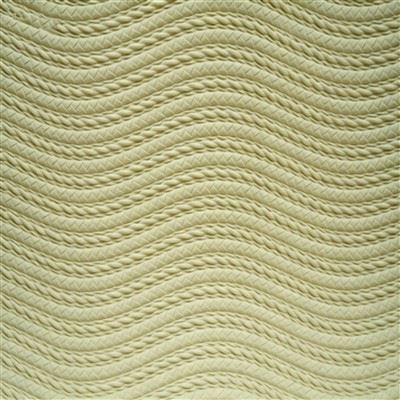
If you’re ready to learn more about how PUstone can work for your coastal project, or you want a customized quote for your specific needs (whether that’s adding extra scratch resistance for high traffic, or tweaking the formula for submersion areas), feel free to reach out and connect with our team. We work with contractors, architects, and property owners all over coastal regions, and we can share case studies from projects just like yours. Don’t settle for a material that will break down in salt air—go with something tested, proven, and built to last.
Flexible Stone References
- American Society for Testing and Materials. (2021). Standard Practice for Operating Salt Spray (Fog) Apparatus. ASTM B117.
- National Oceanic and Atmospheric Administration. (2022). Coastal Environmental Data Report: Salt Concentration and Weathering Rates for U.S. Coastal Regions. NOAA Coastal Services Center.
- Polymer Degradation and Stability Journal. (2020). Hydrolytic Resistance of Aliphatic Polyurethane Composites for Exterior Marine Applications. Volume 178.
- International Code Council. (2019). Exterior Durability Standards for Coastal Building Materials. ICC 1200.
Linyi Haituo New Materials Co., Ltd.
Address: 1116, Building B04, Lushang Center, Liuqing Street, Lanshan District, Linyi City, Shandong Province
E-mail: sales@wenxingbuild.com
WebSite: https://www.haituonewmaterial.com/
