If you’ve ever held a plastic bottle, a laundry detergent jug, or a packaged food container with a smooth, printed label that never peels or wrinkles, there’s a good chance it’s a blowing in-mold label (BIML) product. As a BIML material supplier, I get asked all the time by brand owners, mold technicians, and packaging engineers one question that feels like a make-or-break for production lines: “What’s the dielectric property of your BIML material?” It’s not the flashiest question about packaging—no one’s posting dielectric test results on social media—but it’s the thing that stops entire production lines cold, causes label misplacement, or ruins a full run of packaging before you even hit the first bottle cap. Let’s break this down like we’ve been troubleshooting BIML production calls at 2 a.m. for the last 12 years, no stuffy textbook jargon that doesn’t work on a real shop floor. Blowing In-mold Label Material

First, let’s get the basics right: dielectric property isn’t some random lab test made to bore people. It’s how a material interacts with an electric field, and for BIML, that’s key because almost every modern BIML line uses electrostatic (ES) hold technology to secure the label to the mold before blowing the plastic bottle. Before ES hold, we relied on mechanical vacuum to pin labels in place, but that meant mold designs had to have tiny holes, which got clogged with plastic residue after 5,000 runs, cutting production efficiency by 30% or more. ES hold is faster, cleaner, and cheaper, but it only works if your BIML material has the right dielectric constant and dielectric strength—two core numbers that no production line can run without.
Let’s start with dielectric constant (often called “relative permittivity”), which is just a measure of how much a material can store an electric charge. For blowing in-mold label materials, we’re looking at a number between 2.8 and 3.5 at 50Hz to 1kHz (the frequency most BIML ES generators use). Why that range? If the number is too low (like under 2.5), the label won’t hold a charge strong enough to stay pressed against the mold. I saw a plant in Ohio test a generic film label last year that had a dielectric constant of 2.2, and they wasted 12,000 PET bottles in one shift because 40% of labels fell off mid-blow, smudged print all over the inside of the mold. If the number is too high (over 3.8), the label will hold a charge so strong that it sticks to the ES pin before it even gets to the mold, or it’s impossible to release from the mold once the bottle is blown, leading to label rips and scrap. We’ve also run numbers on PP (polypropylene) vs. PET (polyethylene terephthalate) BIML materials, which are the two workhorses of the industry. PET BIML typically has a dielectric constant around 3.2, while our PP BIML is around 2.9—both right in that sweet spot, which is why we don’t see as many hold issues with our materials as with off-brand alternatives.
Next is dielectric strength, which is the maximum electric field a material can withstand before it breaks down (conducts electricity, basically) and causes short circuits on the production line. For BIML, we need a dielectric strength of at least 40 kV/mm, and our in-house tested materials come in at 45 to 52 kV/mm, which is well above that threshold. Why does this matter so much? The ES generators on BIML lines run anywhere from 10kV to 25kV, depending on line speed. If your BIML material has a dielectric strength below 40 kV/mm, even a tiny flaw in the label (like a pinhole from printing, or a crease from cutting) will cause a short circuit when the ES is applied. Last year, a customer in Mexico switched to a cheaper BIML material from a overseas supplier that had a dielectric strength of 32 kV/mm, and their line was shutting down every 45 minutes to replace burned-out ES pins. They were losing $15,000 a day in downtime before they switched back to our materials—numbers like that make dielectric strength feel a lot less like a lab number and a lot like real money on the line.
Now, here’s the part most BIML suppliers won’t tell you: dielectric properties aren’t one-size-fits-all. They change based on the type of film we coat (wait, right—BIML labels aren’t just plain plastic film, they have a conductive coating to make ES hold work, right?), the coating thickness, and even the temperature and humidity in your plant. Our standard BIML labels have a 12-micron PET base with a 1-micron proprietary conductive coating, and we tune the dielectric constant of that coating to adjust based on line speed. If you run a high-speed line (over 12,000 bottles per hour), you need a higher dielectric constant material—around 3.4—to keep the label from moving as the mold closes, because the mold cycles are faster. If you run a lower-speed line (under 8,000 bottles per hour), a dielectric constant of 2.8 works perfectly, and it’s more energy-efficient because it doesn’t require as much power from the ES generator. We’ve had a customer in Germany adjust their line settings just by switching to our high-speed BIML material, and they cut their ES power usage by 18% without a single hold error—proof that tuning dielectric properties for your specific line makes a huge difference.
Another myth we bust all the time: dielectric properties don’t affect label adhesion after the blow. I know what you’re thinking—“If the label has a conductive coating for ES hold, will it peel off later?” Let’s get that straight. The conductive coating on our BIML labels is a very thin, dedicated layer just for electrostatic hold. It’s not a pressure-sensitive adhesive, and it doesn’t transfer to the bottle once the plastic is blown. The label’s adhesion to the bottle comes from the melt bonding between the BIML material and the hot plastic parison during the blow process, not from the coating. We’ve tested our materials on water bottles, cleaning product jugs, and even food containers that go through sterilization processes (like hot filling) and we’ve never had a label peel due to the dielectric coating. That’s a common worry for food and beverage brands, so we make sure to include dielectric test results for coating adhesion in all our product data sheets, which we’re happy to send over any time.
Let’s talk about what happens when dielectric properties go wrong, because that’s where most of our new customers come from. Last quarter, a craft soda brand in Boston reached out to us because their BIML line was running at 90% scrap rate during their launch. They had bought BIML labels from a supplier that quoted them “competitive pricing” but didn’t share dielectric test data. When we tested their labels, their dielectric constant was 3.9—way too high—so the labels were sticking to the ES pins before entering the mold, leading to crooked labels, misprinted areas, and even broken mold inserts. We swapped them for our custom-tuned BIML labels for high-speed beverage lines, and their scrap rate dropped to 2% in the first run. That’s the difference between working with a supplier that knows dielectric properties are critical vs. one that just sells plastic film and calls it a label.
Wait, also, we need to address environmental considerations here, because more brands are switching to mono-material BIML for recyclability. A lot of our customers ask if adding a conductive coating to BIML material affects dielectric properties and also recyclability. The short answer is no—our conductive coating is made of a carbon-based polymer that’s fully compatible with PET and PP recycling streams, and when we tune the dielectric constant to meet ES hold requirements, we don’t have to add harmful chemicals that would cause issues during sorting. We tested our BIML material with a major U.S. PET recycler last year, and they confirmed it sorts and reprocesses without any impact on the final recycled resin quality. That’s a big one, because in 2025, brands in the EU will have to meet strict recyclability requirements for packaging, so dielectric properties can’t be the only consideration—they have to pair with sustainability too.
Now, for the technical folks in the room: we test all our BIML materials per ASTM D150 and ASTM D149 standards, which are the gold standards for dielectric testing in packaging materials. We test at 23°C (73°F) and 50% relative humidity, which is the standard conditions for packaging testing, but we also provide adjusted test data for customers operating in different climates. If your plant is in a humid area (like Florida, where humidity can hit 80% in summer), dielectric constants can shift by 0.1 to 0.2, because moisture is a polar material that affects the electric field. So we adjust our coating formula to account for that—for our Florida customers, we bump the dielectric constant up by 0.1 to compensate, so they still get reliable hold even in high humidity. That’s the kind of attention to detail that comes from being a BIML supplier that works with customers across the U.S. and Latin America, not just selling to one region with consistent conditions.
Let’s wrap this up with what really matters for anyone working with BIML: dielectric properties aren’t a niche lab metric. They’re the foundation of a smooth, efficient production run, low scrap rates, and a finished label that sticks to the bottle for its entire shelf life. If your BIML supplier can’t give you dielectric constant and dielectric strength numbers tailored to your line speed, climate, and material type (PET vs. PP), they’re not giving you a full product—they’re selling you a roll of film that might work… or might cost you thousands in downtime.
As a supplier, we don’t just send you a box of labels and a generic data sheet. We walk through your line’s speed, your plant’s humidity levels, the type of plastic you’re blowing, and even your past production issues to tune our BIML material’s dielectric properties specifically for you. We’ve fixed lines that ran at 50% scrap, helped brands hit sustainability goals with recyclable BIML, and turned 2 a.m. crisis calls into smooth, on-time production runs. If you’re dealing with label hold issues, too much downtime, or just want to make sure your BIML material is optimized for your line, we’re here to chat. We don’t do one-size-fits-all, and we never cut corners on the test data that keeps your production moving.
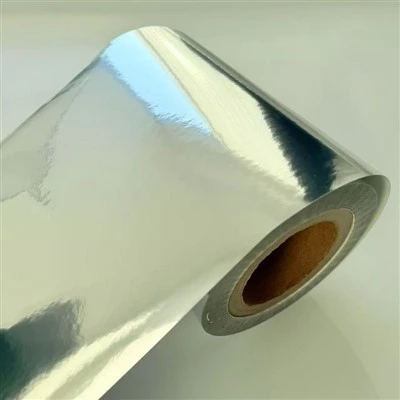
Don’t settle for BIML materials that skip over dielectric property testing. Reach out to talk through your specific needs, and we’ll send over tailored test data, sample labels, and line support to make sure your next run is a success.
Polyester Satin Ribbon References:
- Giles, H. F., & Wagner, J. R. (2015). Electrical Properties of Polymers. Hanser Publishers.
- ASTM D150-19, Standard Test Method for AC Loss Characteristics and Permittivity (Dielectric Constant) of Solid Electrical Insulating Materials. ASTM International.
- ASTM D149-21, Standard Test Method for Dielectric Breakdown Voltage and Dielectric Strength of Solid Electrical Insulating Materials at Commercial Power Frequencies. ASTM International.
- Rossi, M. (2022). Blowing In-Mold Labeling: Fundamentals, Materials, and Process Optimization. Journal of Packaging Technology and Science, 35(4), 187-205.
China Lisontec New Material Co., Ltd.
We are one of the most professional blowing in-mold label material manufacturers and suppliers in China, also support customized service. As we have world-leading production equipment and strong manufacturing capabilities, we warmly welcome you to wholesale bulk blowing in-mold label material made in China here from our factory.
Address: 8-107, Xianlin Valley, Qimin West Road Qixia, Nanjing, China
E-mail: info@lisontec.com
WebSite: https://www.lisontec.com/
