Are 413F spare parts resistant to chemicals? 413F Spare Parts
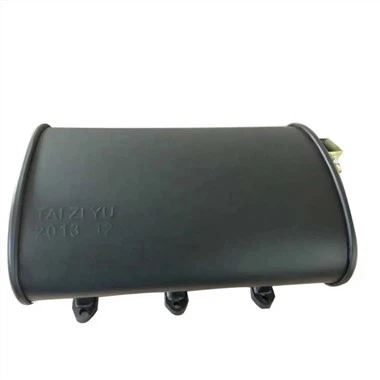
As a prominent supplier of 413F spare parts, I often encounter inquiries from customers regarding the chemical resistance of these components. This is a crucial aspect as many industrial applications expose parts to a wide range of chemicals, and the ability to withstand such exposure is vital for the longevity and performance of the equipment.
Before delving into the chemical resistance of 413F spare parts, it’s essential to understand what 413F is. 413F is a type of stainless – steel alloy. Stainless steels are well – known for their corrosion – resistant properties, and 413F is a modified version of the standard 410 series, with the addition of sulfur (F grade indicates free – machining due to sulfur addition). This alloy typically contains chromium (around 11.5% – 13.5%), which is a key element in providing corrosion resistance by forming a passive oxide layer on the surface. Nickel, carbon, and other elements are also present in smaller quantities, and they further influence the material’s properties.
One of the primary factors determining the chemical resistance of 413F spare parts is the chemical environment they are exposed to. In mild chemical environments, such as those with low concentrations of non – aggressive acids and alkalis, 413F spare parts generally exhibit good resistance. For example, in aqueous solutions of acetic acid with a low concentration (less than 10%), the passive oxide layer on the surface of 413F can prevent the material from reacting vigorously with the acid. The chromium in the alloy continuously replenishes the oxide layer, protecting the underlying metal from further corrosion.
However, when it comes to more aggressive chemicals, the performance of 413F may vary. In solutions of hydrochloric acid (HCl), even at moderate concentrations, 413F can experience significant corrosion. Hydrochloric acid is a strong reducing acid that can break down the passive oxide layer on the surface of the alloy. Once the protective layer is compromised, the metal beneath is directly exposed to the acid, leading to pitting corrosion, where small holes form on the surface of the part. This can weaken the structural integrity of the 413F spare part and eventually cause it to fail.
Nitric acid, on the other hand, has a more complex interaction with 413F. At low concentrations, nitric acid can actually strengthen the passive oxide layer on the surface of the alloy, enhancing its corrosion resistance. But at high concentrations (above 60%), nitric acid becomes a strong oxidizing agent and can react with the alloy, causing general corrosion and potentially dissolving the metal.
In alkaline environments, 413F spare parts usually show better performance. Sodium hydroxide (caustic soda) solutions, for instance, have limited corrosive effects on 413F at normal temperatures and concentrations. The passive oxide layer can remain stable in these alkaline solutions, protecting the alloy from corrosion. However, at high temperatures and high concentrations of alkalis, the layer may start to dissolve, and corrosion can occur.
Another important factor is the presence of other substances in the chemical environment. Chlorides, for example, can be extremely detrimental to the chemical resistance of 413F. Even in small amounts, chlorides can penetrate the passive oxide layer and initiate pitting corrosion. This is a common problem in environments such as seawater, where high levels of chloride ions are present. Seawater also contains other dissolved salts and oxygen, which can further accelerate the corrosion process.
The surface finish of the 413F spare parts also plays a role in their chemical resistance. A smooth surface finish can reduce the likelihood of chemical attack as it provides fewer sites for corrosion to initiate. Rough surfaces, on the other hand, can trap chemicals and promote localized corrosion. During the manufacturing process of our 413F spare parts, we pay close attention to the surface finish to ensure the best possible chemical resistance.
In addition to the chemical environment, the temperature also affects the performance of 413F spare parts in chemical exposure. Generally, as the temperature increases, the rate of chemical reactions also increases. For example, in a solution of sulfuric acid, the corrosion rate of 413F can be significantly higher at elevated temperatures compared to room temperature. At high temperatures, the passive oxide layer may degrade more quickly, and the metal may react more readily with the acid.
When it comes to oils and greases, 413F spare parts show good resistance. These substances are relatively inert and do not cause significant corrosion to the alloy. In fact, in many applications where 413F parts are used in machinery, oils and greases can act as a lubricant and also provide an additional layer of protection against environmental factors.
In the food and beverage industry, 413F spare parts can be suitable for some applications. The alloy is non – toxic and can withstand certain food – grade chemicals. For example, in the processing of non – acidic juices and milk products, 413F parts can be used as they are resistant to the mild chemical components present in these substances. However, in the production of acidic foods such as citrus juices, careful consideration must be given to the chemical resistance of the parts as the acidic environment may cause corrosion.
As a supplier of 413F spare parts, we understand the importance of providing accurate information about the chemical resistance of our products. We offer technical support to our customers to help them determine the suitability of 413F spare parts for their specific applications. Our team of experts can evaluate the chemical environment, temperature, and other factors to provide personalized advice on whether 413F is the right choice.
If you are in an industry that requires parts with high chemical resistance, it’s important to have a thorough understanding of your chemical environment. We can conduct tests on your specific chemical conditions to assess how our 413F spare parts will perform. This proactive approach helps in preventing premature failure of parts and ensuring the smooth operation of your equipment.
In conclusion, 413F spare parts have a certain level of chemical resistance, but their performance varies depending on the chemical environment, temperature, and other factors. In mild chemical environments and some specific industrial applications, they can offer reliable service. However, in aggressive chemical conditions, alternative materials may need to be considered.

If you are considering purchasing 413F spare parts for your applications, we invite you to reach out to us to discuss your requirements in detail. Our experienced team is ready to assist you in making the best choice for your business. We can provide samples for testing and elaborate on all aspects of the product, including its chemical resistance. Contact us today to start a fruitful procurement discussion and find the perfect 413F spare parts for your needs.
1011/2011 Spare Parts References
- ASM Handbook Volume 13A: Corrosion: Fundamentals, Testing, and Protection
- Stainless Steel Handbook, Third Edition
- Industrial Corrosion: Materials and Environment by Wiley – VCH Verlag GmbH & Co. KGaA
Xingtai Haoheng Trading Co., Ltd.
Xingtai Haoheng Trading Co., Ltd. is one of the most professional 413f spare parts manufacturers and suppliers in China, specialized in providing high quality auto parts made in China. We warmly welcome you to wholesale discount 413f spare parts in stock here from our factory. For customized service, contact us now.
Address: No.88, Quannan Street, Shangquancheng, Xingtai, Hebei, China.
E-mail: Zhang@hauhen.com
WebSite: https://www.xtengineparts.com/
