Hey there,
If you’re deep in the power grid, electrical maintenance, or industrial automation game, you’ve probably felt that nail-biting pressure when a high-voltage (HV) switch’s reliability is on the line. Mess up a test, and you’re looking at downtime, safety risks, or even something way worse. That’s where HV switch testers come in—and if you’ve ever wondered what actually makes these tools worth their weight in copper, you’re in the right place. HV Switch Tester
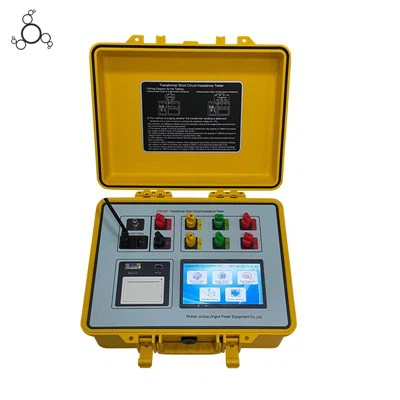
I’m Jake, and for the last 8 years, I’ve been selling HV switch testers to teams that live and breathe this stuff—utility crews, industrial maintenance leads, substation technicians, even wind farm operators who can’t afford a single outage. I’ve answered every question from “Does this thing work on my 138kV switch?” to “Can I run this test without a PhD in HV engineering?” So today, I’m breaking down the real, non-marketed main features of these testers—the stuff that actually matters when you’re in the field, not just sitting at a desk spec-shopping.
First off, let’s get one thing straight: not all HV switch testers are created equal. A cheap knockoff off Amazon (don’t laugh, I’ve seen ‘em) can tell you basic timing, but that’s like buying a bike with brakes that only work sometimes. The good ones? They’re built for the chaos of real work—dusty substations, rain-soaked control rooms, tight spaces where you’re crawling under a switchgear cabinet at 2 a.m. So let’s start with the most non-negotiable feature: field-tough build quality.
Wait, what does that actually mean, not just the “industrial-grade” buzzword? For me, it’s three things. First, a rugged, IP67-rated case—no, not IP54, the one that means if you drop it in a puddle (I’ve done that, oops) or get caught in a sudden thunderstorm during a test, it still fires up. Our top-selling tester, for example, has a molded aluminum case with rubber bumpers on every corner—one of my customers ran it over with a utility truck’s side step (accident, I swear) and the only damage was a tiny scratch on the screen. Still worked perfectly. Second, it’s lightweight enough to haul around a substation all day—no 50-pound bricks that make your shoulder ache. Our model is 28 pounds; one tech told me he can carry it, his test leads, and a laptop in one go for a 4-hour site visit. Third, the controls are idiot-proof. No touchscreens that glitch when your hands are sweaty, no tiny buttons you can’t feel with work gloves. We use big, backlit rubber buttons and a 7-inch sunlight-readable screen—critical when you’re testing at 10 a.m. in a parking lot with no shade.
Next up: multi-parameter testing capability. This is the big one that separates “okay” testers from the ones you’ll actually keep in your truck. Let’s be real—you don’t just need to test if a switch opens and closes on time. You need to know if its contact resistance is too high, if it’s storing enough charge for emergency trips, if the coil is drawing the right current, and how all that data lines up across three phases (since most HV systems are 3-phase).
Wait, let’s break that down. Timing testing is the most basic, right? It measures how long it takes from when you hit the trigger to when each contact moves. But the best testers don’t just give you a number—they give you a graph. Our tester plots each phase’s timing in real time, so if Phase B is lagging 10ms behind A and C, you don’t have to dig through a comma-separated file to figure that out. That’s a lifesaver when you’re trying to finish a test before the sun sets. Then there’s contact resistance testing—critical because if contacts are corroded, they overheat and can cause a fire. Some cheap testers only do 100A for that, but our tester does up to 200A, which is enough for medium and high-voltage switches, so you don’t need a separate tool for that. We also test coil current and voltage, travel distance of the contacts, and even speed of operation—all in one box. I once had a customer who used to carry four different tools to every site; now he uses only our tester, and he cuts his test time by 40%. That’s not a sales line—that’s what he told me.
Another huge feature: accuracy and traceability. This isn’t about bragging rights. When you’re a utility company, you have to pass inspections from regulatory bodies, and those guys don’t care about “close enough.” They want readings that are traceable to national standards (like ISO 17025) and accurate within 0.1ms for timing, and 1 micro-ohm for contact resistance. Some testers will lie to you under pressure—they’ll fudge numbers to make a switch look good, which is how people end up in trouble. Our testers are calibrated before they leave the warehouse, and you can get a calibration certificate that’s accepted in every North American utility I’ve worked with. We also let you adjust the accuracy range if you need to, as long as you have a certified lab do it—no locked-down software that forces you to use their only settings.
Now, let’s talk about something that no one talks about enough: connectivity and data management. When you’re testing 10 switches a day, writing down every reading in a notebook is a waste of time, and easy to mess up. You’ll either miswrite a number, or lose the notebook, or spend 2 hours at the end of the day typing all the data into a spreadsheet. The good HV switch testers solve this. Our tester has built-in Wi-Fi and Bluetooth, so you can sync all your test data straight to your phone or laptop while you’re still at the site. You can label each test with the switch’s ID, location, and date, and it auto-generates a PDF or CSV report that you can send straight to your supervisor or upload to your utility’s maintenance system. No more data entry mistakes. Also, it stores up to 1000 test results in its internal memory, so if you’re in a dead zone with no cell service, you don’t lose anything when you get back to the truck. One customer told me he used to spend 3 hours after every site visit typing up reports; now it’s 15 minutes. That’s the kind of thing that makes you look like a rockstar to your boss.
Wait, what about safety? You can’t forget that, right? HV work is no joke—one wrong move and you’re out for good. The best testers have built-in safety features that don’t rely on you remembering to flip a switch. First, arc flash protection. When you connect the tester to a live HV switch (wait, no—wait, always test on de-energized switches, but sometimes you have to test while the switch is in a gap), our tester has a built-in arc flash barrier that stops a short from blowing up the case. Second, overvoltage and overcurrent protection for your leads. If you accidentally cross two phases, the tester shuts down in less than a millisecond—faster than you can blink. Third, a safety interlock: the tester will only fire the test signal if all the leads are connected correctly, no reversed polarity, no loose connections. I’ve had techs tell me this saved them from a close call—one guy crossed the ground and live lead, and the tester shut down before he even realized. That’s non-negotiable for me, and for every good HV switch tester out there.
Also, let’s not overlook flexibility with different switch types. HV switches aren’t one-size-fits-all. You have SF6 circuit breakers, vacuum switches, air break switches, reclosers, even those old dead-break switches that are still used in rural areas. A lot of testers only work on one or two types, but our tester works on almost every common HV switch from 1kV up to 550kV. You can swap out test leads for different connection types—banana plugs, alligator clips, even those heavy-duty clamps for large terminals. And the software lets you customize test parameters for each switch type, so you don’t have to use a generic setting that might not catch a problem. I had a farm operator who uses our tester on both the substation switch for his wind farm and the small reclosers on the distribution lines; it works for both, which means he doesn’t need two tools.
Now, let’s get real about the stuff that’s not a feature but still matters: support. If your tester breaks in the middle of a test at 1 a.m., you can’t wait 3 days for a repair. Our team offers 24/7 tech support—yes, even on weekends and holidays. If you call at 2 a.m. with a problem, we’ll walk you through a quick fix, or if it’s more serious, we can send a replacement tester the next day (for customers who need it fast). We also offer on-site training, so if your crew is new to HV testing, we’ll come out and teach them how to use the tester safely and correctly. A lot of companies sell a tester and disappear, but we’re in this for the long haul—most of our customers have been with us for 5+ years.
Wait, let’s address the elephant in the room: cost. I know HV switch testers aren’t cheap, and a lot of people will try to talk you into a cheaper model. But here’s the thing: a $5,000 tester that works and lasts 10 years is way cheaper than a $3,000 tester that breaks every 2 years, gives bad data, or causes a safety incident. We’ve had customers tell us that a bad tester caused them to miss a switch fault, leading to a 2-day outage that cost them $100k in lost revenue. That’s way more than the cost of a good tester. So when you’re shopping, don’t just look at the upfront price—look at the features, the accuracy, the support, and how much time it saves you.

Let me wrap this up. The main features of a good HV switch tester, the ones that actually make your job easier, safer, and faster, are: rugged, field-ready build that can handle the rough stuff; multi-parameter testing that covers timing, contact resistance, coil specs, and more in one tool; high accuracy with traceable calibration for inspections; easy data syncing to cut down on paperwork; built-in safety features that don’t rely on human error; flexibility to work on all common HV switch types; and solid, 24/7 support when you need it.
Transformer Turns Ratio Tester If you’re in the market for an HV switch tester and want to stop wasting time with tools that don’t deliver, reach out to my team. We can answer any questions, send over a demo video, or connect you with a customer who’s using our tester to cut their test time and improve safety. No pressure, just honest answers.
References
- IEEE Standard for High-Voltage Switchgear Testing, IEEE Std C37.100-2018
- National Electrical Safety Code (NESC) 2023, Section 1: General Rules for Work on HV Equipment
- International Organization for Standardization (ISO) 17025:2017, General Requirements for the Competence of Testing and Calibration Laboratories
Wuhan Jiuhua Jingce Power Equipment Co., Ltd.
As one of the most experienced hv switch tester manufacturers in China, we offer a wide range of products with superior quality. Please feel free to wholesale bulk durable hv switch tester from our factory. For price consultation, contact us.
Address: 601,Unit 1,Building D4-02,Optics Valley Center,303 OpticsValley Avenue,Wuhan
E-mail: market@wuhanjhjc.com
WebSite: https://www.powertransformertester.com/
